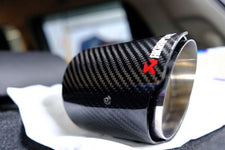

Many buyers look at an exhaust tip and focus on the visible opening. That is understandable. The outlet is what people see from the rear.
But when it comes to fitment, the inlet matters first.
The inlet size decides whether the exhaust tip can slide over your original pipe. The outlet size decides how large and sporty the tip looks from behind. If you mix up these two numbers, you may order a product that looks right in photos but cannot be installed correctly.
This guide explains inlet size, outlet size, length, and clearance in plain language.
You can compare product styles through Kipalm Single Tips
(https://www.kipalm.com/collections/carbon-fiber-single-tips),
Kipalm Dual-tips
(https://www.kipalm.com/collections/carbon-fiber-dual-tips),
and Kipalm BMW Exhaust Tips
(https://www.kipalm.com/collections/bmw-exhaust-tips).
What Is Exhaust Tip Inlet Size?
The inlet size is the opening that connects to the original exhaust pipe. It is usually listed as the inner diameter of the tip inlet.
This is the number that decides fitment.
If your pipe outside diameter is 60 mm, you need an inlet that can fit that pipe size properly. If the inlet is too small, it will not go on. If the inlet is too large, the clamp may not hold it firmly.
The inlet is usually hidden after installation, but it is the most important measurement before purchase.
What Is Exhaust Tip Outlet Size?
The outlet size is the visible opening at the end of the exhaust tip. It controls the rear appearance.
For example, a tip may have a 60 mm inlet and an 89 mm outlet. That means it fits over a smaller pipe but creates a larger visual exit at the rear.
Outlet size affects:
- Rear style
- Sporty or subtle appearance
- Bumper opening clearance
- Visual balance
- Single, dual, or quad outlet design
A larger outlet can look more aggressive, but it must match the bumper cutout.
Simple Example
Here is a simple way to understand it:
| Measurement | What It Means | Why It Matters |
|---|---|---|
| Inlet size | Connection side | Decides whether the tip fits the pipe |
| Outlet size | Visible end | Decides the rear look |
| Length | Front-to-back size | Decides how far the tip sits |
| Width | Side-to-side size | Important for oval, square, or dual tips |
| Clearance | Space around bumper | Prevents rubbing or heat contact |
Buyers often choose by outlet first. Installers usually check inlet first.
How to Measure the Original Pipe
Measure the outside diameter of the pipe where the new tip will attach. Do not measure the old decorative cover unless the new tip will attach to that same cover.
For a round pipe:
- Let the exhaust cool.
- Clean the pipe edge.
- Measure across the widest point.
- Use a caliper if possible.
- Check the number twice.
For an oval pipe, measure width and height separately. An oval pipe may need a different style or professional installation.
If you are unsure, send photos to Kipalm Contact Us
(https://www.kipalm.com/pages/contact-us).
Why Outlet Size Can Be Misleading
A product photo can make an exhaust tip look larger or smaller than it really is. Lighting, angle, and close-up photography can change the visual impression.
That is why outlet size should be checked against your bumper opening.
A large 101 mm outlet may look great on a wide diffuser but too crowded on a small bumper cutout. A smaller 76 mm or 89 mm outlet may look cleaner on a compact car or subtle build.
The correct outlet is not always the biggest one. It is the one that fits the rear design.
Don’t Forget Length
Inlet and outlet are not enough. Length is the measurement that decides how far the tip extends from the bumper.
A correct inlet with the wrong length can still fail visually. The tip may sit too deep or stick out too far.
Before ordering, check:
- Original pipe end position
- Distance to bumper edge
- Available clamping area
- Bumper depth
- Desired visible length
For BMW-style rear upgrades, length and symmetry are especially important because left-right imbalance is easy to notice.
Carbon Fiber Tips Need Extra Clearance
Carbon fiber exhaust tips often use a carbon outer shell with a stainless steel inner structure. The carbon shell creates the premium look, but it should not be forced against the bumper.
Leave space around the carbon shell. Avoid contact with diffuser edges. Do not choose an oversized outlet if the bumper opening is narrow.
For carbon styling options beyond exhaust tips, you can browse Kipalm Carbon Accessories
(https://www.kipalm.com/collections/stainless-single-tips).
Which Size Should You Choose?
Start with the inlet. Then choose the outlet.
A practical buying order is:
- Confirm original pipe outside diameter.
- Choose a compatible inlet.
- Check bumper opening.
- Choose outlet shape and size.
- Confirm total length.
- Check installation method.
- Ask for fitment help if measurements are close.
Do not order by outlet appearance alone. Fitment comes first, then style.
Final Advice
Inlet size and outlet size are not the same thing. The inlet decides whether the exhaust tip fits your pipe. The outlet decides how the car looks from the rear.
A good exhaust tip should match both. It should install securely, clear the bumper, and look balanced with the vehicle’s rear design.
Before ordering, save your measurements and compare them with the product listing. If you are not sure, contact Kipalm
(https://www.kipalm.com/pages/contact-us)
before purchase.
FAQ
Q1: Is inlet size the same as outlet size?
No. Inlet size is the connection side. Outlet size is the visible rear opening.
Q2: Which size should I check first?
Check inlet size first because it determines whether the tip can fit your pipe.
Q3: Can I choose the biggest outlet available?
Not always. The outlet must fit the bumper opening and match the car’s rear style.
Q4: What if my pipe is oval?
Measure width and height separately. Oval pipes may need special fitment advice.
Q5: Why does length matter?
Length controls whether the tip sits too deep, too flush, or too far outside the bumper.