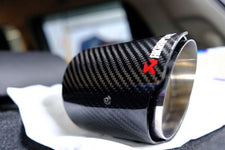

A new exhaust tip should make the rear of the car look cleaner, not create a new noise. If you hear a metallic rattle, buzzing sound, or light knocking after installation, something is probably loose, touching, or not aligned correctly.
The good news is that most exhaust tip rattles are easy to diagnose.
Rattling often comes from a loose clamp, wrong inlet size, short pipe contact area, bumper contact, or vibration under load. Before replacing the product, check the installation step by step.
For clamp-on and adjustable options, you can browse Kipalm Adjustable Tips
(https://www.kipalm.com/collections/adjustable-tips)
and Kipalm Single Tips
(https://www.kipalm.com/collections/carbon-fiber-single-tips).
Start With the Clamp
The clamp is the first place to check. If it is not tightened evenly, the exhaust tip can move slightly when the car starts, idles, or drives over rough roads.
A loose clamp may create:
- Metallic tapping
- Buzzing at certain RPM
- Movement when touched by hand
- Uneven outlet position
- A tip that rotates after driving
Let the exhaust cool completely before touching it. Then hold the tip gently and check whether it moves. If it moves by hand, it is not secure enough.
Tighten the clamp evenly, but do not overtighten to the point of damaging the pipe or clamp structure.
Check the Inlet Size
A clamp cannot fix a badly matched inlet size.
If the inlet is too large compared with the original pipe, the tip may still shake after tightening. The clamp may squeeze one side, but the contact area remains uneven. This can create a rattle during vibration.
If the inlet is too small, the installer may force it partially onto the pipe, leaving too little contact length. That can also become unstable.
Before buying a replacement, measure the outside diameter of the original pipe. Do not estimate from the model name only.
Make Sure There Is Enough Pipe Contact
A clamp-on exhaust tip needs enough straight pipe to hold. If the original pipe is too short, bent, angled, rusty, or uneven, the tip may not sit firmly.
Short contact can happen when:
- The original pipe ends too close to the bumper.
- The old decorative trim was cut off.
- The pipe points downward.
- The pipe is oval instead of round.
- The muffler outlet has been repaired before.
In these cases, an adjustable tip or professional installation may be safer.
You can compare adjustable designs here: Kipalm Adjustable Tips
(https://www.kipalm.com/collections/adjustable-tips).
Look for Bumper or Diffuser Contact
Sometimes the tip itself is tight, but it touches the bumper, diffuser, or plastic trim while driving. This can sound like a rattle even when the clamp is secure.
Check the clearance around:
- Top edge of the tip
- Left and right side of the outlet
- Bottom diffuser edge
- Carbon fiber shell
- Inner stainless steel pipe
If the gap is too tight, engine movement and road vibration may cause contact. This is common when the outlet is too large for the bumper opening.
Carbon fiber exhaust tips need special care here. The carbon shell should not rub against plastic trim or painted surfaces.
Check Left and Right Alignment
For a pair of exhaust tips, one side may be tight while the other side rattles. This can happen if the original pipes are not perfectly equal or if one clamp was tightened before final alignment.
Step back and check:
- Are both tips at the same depth?
- Are both tips at the same angle?
- Is one side closer to the bumper?
- Does one side sit lower?
- Does either side move by hand?
Do not judge only from close range. Look from behind the car and from both rear corners.
Dirt, Rust, or Uneven Pipe Surface
A clamp works best on a clean, even pipe. Dirt, rust, old weld marks, or leftover coating can prevent full contact.
Before installation, clean the pipe surface. Remove loose rust or dirt. If the pipe is badly damaged or uneven, ask a workshop whether the pipe needs repair before fitting a new tip.
A beautiful exhaust tip cannot install securely on a poor pipe surface.
When to Ask a Workshop
DIY adjustment is fine for simple clamp-on issues. But some problems need professional help.
Ask a workshop if:
- The pipe is cracked or badly rusted.
- The old tip was welded and cut off.
- The bumper clearance is too tight.
- The pipe angle is wrong.
- The tip still moves after correct tightening.
- You hear exhaust leaks, not just a decorative tip rattle.
Also remember that decorative tips are different from modifying emissions-related parts. EPA provides guidance on aftermarket defeat devices and tampering
(https://www.epa.gov/enforcement/epa-fact-sheet-re-aftermarket-defeat-devices-and-tampering).
If a modification affects more than the visible outlet, check local rules and professional advice.
Final Advice
An exhaust tip rattle is usually not mysterious. Check clamp tightness, inlet size, pipe contact length, bumper clearance, and pipe surface condition.
If the product size is correct, a careful reinstallation often solves the problem. If the pipe is unusual or the bumper opening is tight, an adjustable tip or workshop installation may be a better route.
For fitment support, contact Kipalm
(https://www.kipalm.com/pages/contact-us)
with rear photos, pipe diameter, and a short video of the rattle if possible.
FAQ
Q1: Why does my exhaust tip rattle only at idle?
Idle vibration can reveal a loose clamp, poor contact area, or bumper contact that is not obvious when parked.
Q2: Can a wrong inlet size cause rattling?
Yes. If the inlet is too large or too small, the clamp may not hold the tip securely.
Q3: Should exhaust tips touch the bumper?
No. Leave clearance around the outlet and carbon shell.
Q4: Can I fix a rattling exhaust tip myself?
Often yes, if it is only a clamp issue. Let the exhaust cool first, then check tightness and alignment.
Q5: What should I send to Kipalm for help?
Send pipe diameter, rear photos, side photos, and a short video showing the movement or noise.